
The inaugural Russell Group Menus Leaderboard
We analysed 24 menus from the UK’s top 24 universities to see how well they apply the key behaviour change principles of nudge theory to drive plant-based orders. The result is the Russell Group Menus Leaderboard.
What do they have in common?
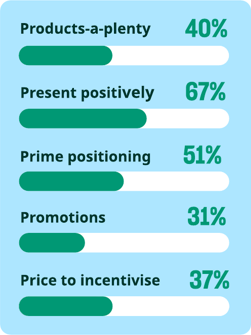
Using an evaluation method developed with leading behaviour change scientists, we assessed each institution’s publicly accessible event catering menu against Forward Food’s five techniques for effective plant-based nudges. Each menu received a score for each category and an overall score. The average scores across the 24 menus were:
Products-a-plenty – 40% average
Example: King’s College London (62%)
The King’s Food menu offers plenty of plant-based choice across all menu sections, especially canapés and desserts. This spread keeps plant-based options visible throughout the customer journey, rather than confined to a few dedicated sections. More than half of listed dishes are default plant-based, with an additional 9% optionally plant-based.
Present positively – 67% average
Example: University of York (82%)
The Campus Kitchen Main Menu made excellent use of sensory language for its plant-based dishes. A simple lentil dish becomes “whipped dhal”, slaw is “crunchy slaw”, and a cucumber salad becomes “smashed cucumber salad”. Words that help diners anticipate the flavour, texture and experience of a dish are a proven way to increase sales. We encourage menu writers to apply this to plant-based dish names and descriptions and to avoid using exclusionary labels in naming such as “vegan lasagne”, which says little about the dish beyond what it lacks.
Prime positioning – 51% average
Example: University of Exeter (85%)
Fresh Ideas at the University of Exeter integrated plant-based dishes throughout its menu, listing them first in almost all sections. Placing plant-based options in the most visible and prominent positions on a menu is an important way to make sure diners notice and consider them.
Promotions – 31% average
Example: University of Oxford (39%)
University of Oxford (39%): Promotions stood out in our scoring as an area where all institutions could do more. Promoting the benefits of plant-based options encourages diners to try them. This can include showing that dishes are recommended by a trusted source, highlighting their popularity, or emphasising particular nutrients like fibre or protein. OUEV at Oxford did this well with their “Superfood salad, chickpea, beetroot and avocado”. The term “superfood” implies a health or wellbeing benefit, adding to the dish’s perceived quality.
Price to incentivise – 37% average
Example: University College London (50%)
UCL Hospitality demonstrates sector-leading practice with the gold standard of effective nudging: plant-based defaults. Its menu keeps choice for diners by offering animal-based proteins as add-ons with a surcharge. For example, the Kale Caesar Salad can include Roasted Chicken Breast for an additional £3. Its sit-down dining menu likewise offers several plant-based and vegetarian dishes, with one meat option (Confit Duck Leg) available for an additional £7.50. UCL also notes that it serves oat milk with tea and coffee by default. Presenting plant-based dishes as the default choice on the menu can increase uptake by making them easier, more visible and normalised.
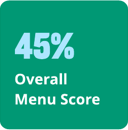
So while the overall average may seem low, looking at each behaviour change principle individually in practice can show us where the higher education sector is excelling and where opportunities lie.
For caterers looking to make menus more plant-based and sustainable without removing choice entirely, nudges offer simple, effective solutions.
How are the UK’s leading universities marketing and selling plant-based food?
These menus point to where plant-based campus catering is heading: not separate vegan offers, but familiar, craveable dishes that appeal to every diner. When plant-based food is the star of the menu rather than the black sheep of the buffet, it can be inclusive, sustainable and commercially smart.
It is unsurprising that positive language is common across menus. It reflects the pride catering teams take in their dishes – a sign of a quality dining experience.
Integrating plant-based dishes throughout a menu may seem a no-brainer, but the fact that many institutions in the Russell Group Menus Leaderboard now do so shows how far the sector has come since the days of separate veggie or vegan menus, where plant-based options were hidden away for only the most determined vegan diners to find.
Too often, plant-based dishes underperform because they are treated as a response to specialist dietary needs rather than as compelling choices in their own right. The Russell Group Menus Leaderboard shows that when caterers bring the same creativity, promotion and commercial thinking to plant-based dishes as to the rest of the menu, diners respond
Learnings for other foodservice operators
- Trial plant-based defaults. If an animal-protein dish on your menu can already be requested as plant-based, flip it: make it plant-based by default, with meat available on request.
- Design plant-based dishes for everyone, not only vegans. If your diners are mostly meat-eaters or flexitarians, like most people, consider how to persuade them to order plant-based dishes. Most institutions use a discreet ‘ve’ symbol or similar to indicate dietary suitability without announcing that a dish is vegan and potentially putting off other diners.
- Use appetising imagery and sensory descriptions to communicate taste and texture. Don’t make a big deal of a dish being plant-based; describe the experience of eating it, not the ingredients it lacks.
- Promote dishes through sampling, flyers, A-boards, digital screens and influencers. Involve your regular diners in developing your offer.
- Price plant-based dishes at or below their meat equivalents to demonstrate value and remove barriers to ordering the more sustainable option. Don’t price your cauliflower steak the same as a beef steak – that’s just asking for a climate crisis.
To contract or not to contract
The vast majority of Russell Group event catering is run in-house: only one of the 24 institutions uses a contract caterer (UCL with Gather & Gather). The choice of management model can depend on many factors including budget, infrastructure and location. However, we advise institutions to also look closely at the designed menus contractors offer when putting catering services out to tender. Ask to see their strategy for plant-based menu marketing, whether they have corporate targets for food-based emissions, and how they would help you meet your own sustainable food goals.
Most importantly, remember that adding more plant-based dishes to a menu is one critical step towards increasing uptake, but it is not the only one. What else is the contractor doing to promote those dishes and reduce demand for meat- and dairy-heavy dishes? Ultimately, you want to see an impact in your procurement data – meaning fewer animal products purchased in, as there is less demand for them from your diners.
A strategic approach to integrating plant-based dishes onto your menus will make a real difference to your emissions targets and move your efforts towards a better food system.
And remember – you’re not doing it alone. Forward Food is here to help.