
Plant-rich menus can save money: lessons from Parliament for public sector caterers
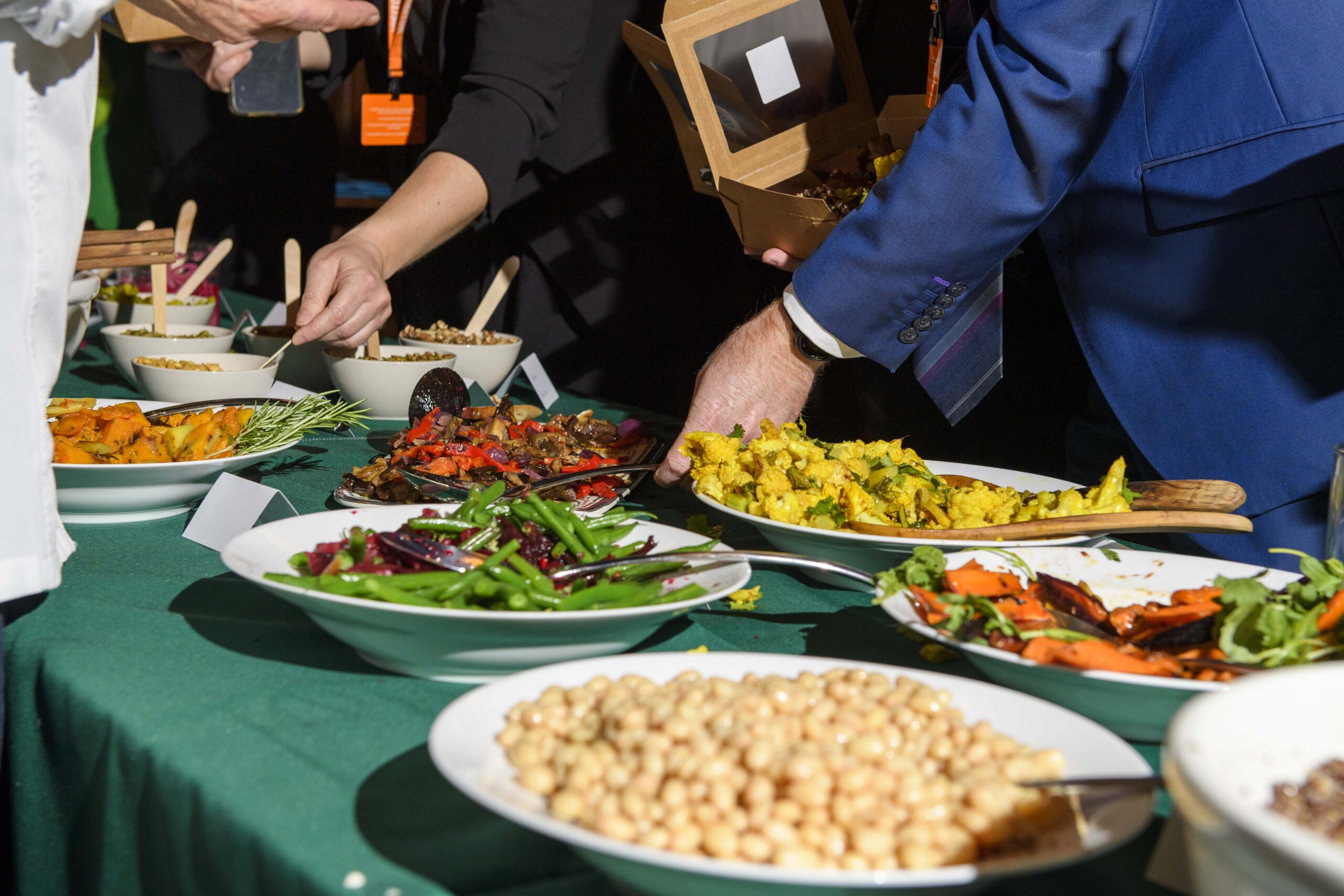
Public sector caterers are being asked to do more with less: manage rising food costs, meet sustainability commitments, improve nutrition and continue serving food that people genuinely want to eat.
New research commissioned by Humane World for Animals UK suggests these priorities do not have to compete.
Last month, we launched Could increasing plant-based catering in the Houses of Parliament save money?, an independent economic analysis by Griffin Carpenter and Artūrs Kaņepājs, using Parliament’s own food procurement data.
The headline finding is striking. Replacing just 30% of the meat, fish and shellfish purchased across the Houses of Parliament with whole-food plant proteins such as beans, lentils and tofu could save approximately £216,000 every year in ingredient costs. The same shift could also reduce associated greenhouse gas emissions by around 650 tonnes of CO₂e annually.
That equates to around 57p saved for every £1 of meat and seafood replaced.
And there is considerable room for change. More than 92% of the protein-rich food currently bought on the Parliamentary estate comes from animal sources.
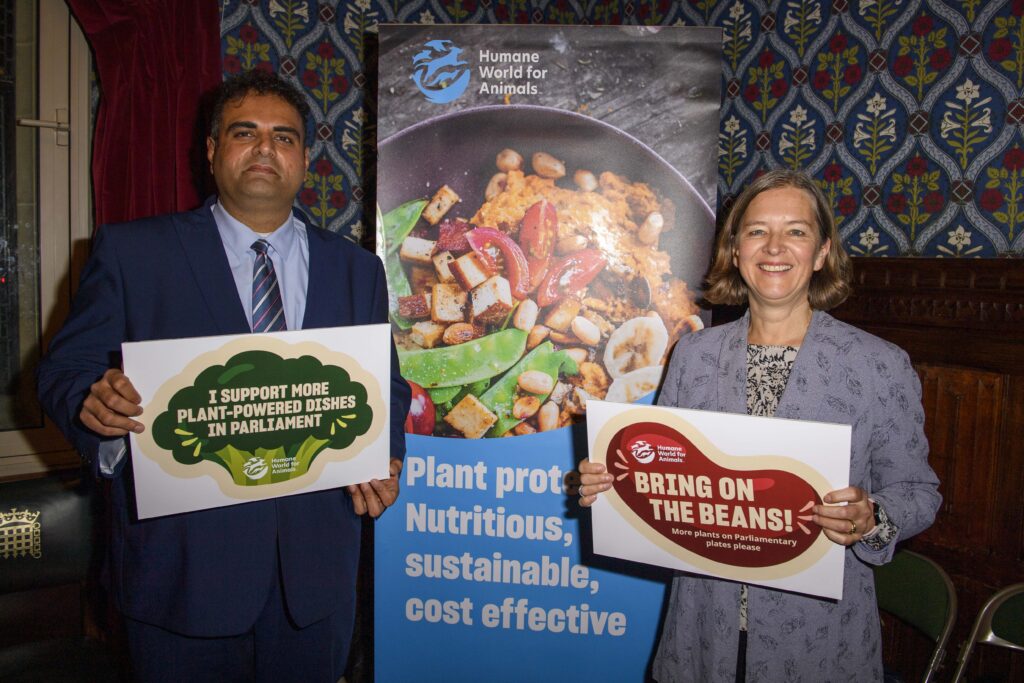
It’s the recipe, not the replica
One of the most useful findings for caterers is how those savings are achieved.
The economic case does not rest on replacing every meat product with a manufactured plant-based equivalent. In fact, the research found that doing this could increase Parliament’s ingredient bill.
Instead, the strongest savings come from redesigning recipes around naturally affordable, protein-rich ingredients such as beans, lentils, pulses and tofu. The analysis found that an average meat or fish dish in the House of Lords costs around £2.04 per serving in ingredients, compared with £1.42 for a redesigned plant-based dish.
That distinction matters for any catering operation facing pressure on margins.
Cost savings add another string to the bow of sustainable food systems change. Plant-rich catering can help caterers make the case not only to sustainability teams, but to finance directors, procurement leads and clients.
From modelling to the kitchen
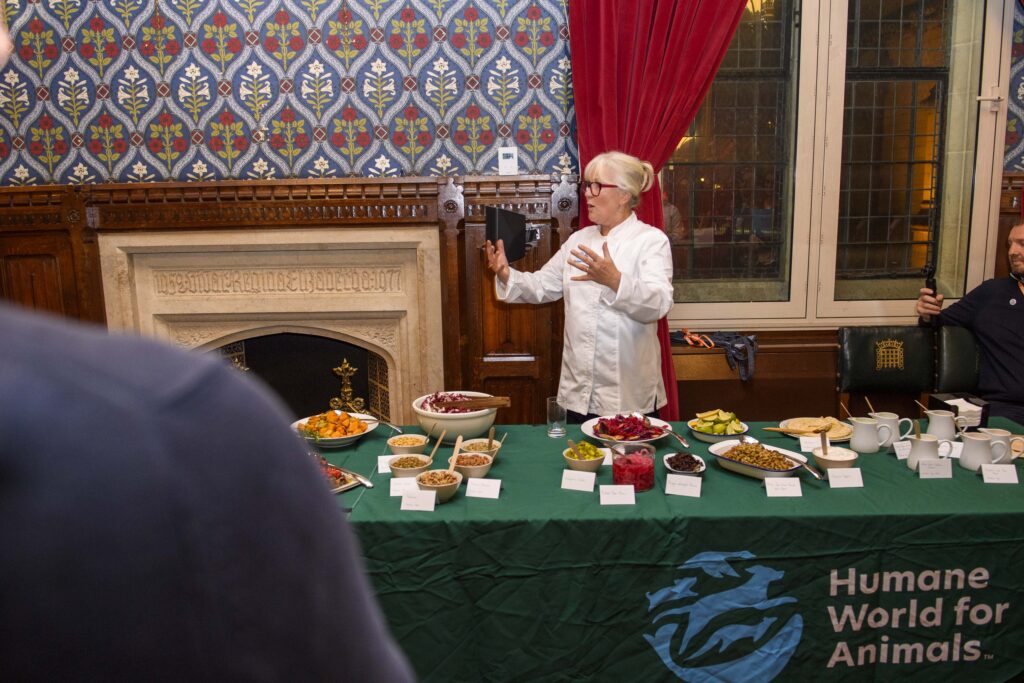
We launched the research at a House of Commons reception on 21 October, where the numbers were translated into something much more tangible.
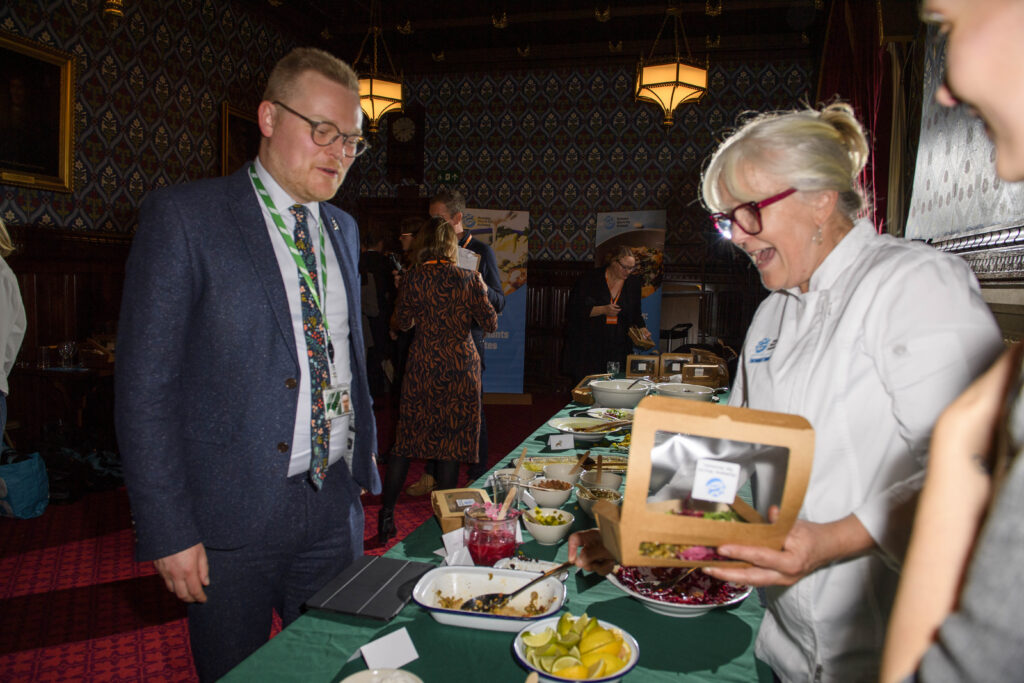
Following a presentation of the findings, Forward Food chef Jenny Chandler led a hands-on workshop demonstrating how to build a balanced plant-based dish using British beans and seasonal ingredients, before MPs created their own salads.
That practical element matters. Evidence reviewed for the report suggests that successful plant-rich transitions tend to combine menu redesign, chef training, phased implementation and careful monitoring of uptake and waste.
Examples elsewhere show what is possible. The University of Cambridge removed beef and lamb from its outlets and actively promoted plant-based options between 2015 and 2018, achieving a 33% reduction in food-related carbon emissions and a 28% reduction in land use, while operating within its existing catering budget.
Four takeaways for public sector caterers
1. Start with recipes, not substitutes.
Build great dishes around pulses, beans, lentils, tofu, grains and vegetables, using manufactured alternatives selectively.
2. Test before you scale.
Pilot changes, gather diner feedback and track ingredient cost, sales, uptake and waste. The Parliamentary report specifically recommends monitoring these measures to understand whether modelled savings translate into operational savings.
3. Invest in chef skills.
A procurement target alone cannot create a delicious menu. Training chefs to develop plant-rich food that works at scale is fundamental. Forward Food has already trained around 500 chefs across 50 UK universities, the Ministry of Defence and major foodservice businesses.
4. Treat plant-rich food as a commercial opportunity.
Plant-based dishes need to sell, not simply sit on the menu. Price, positioning, appealing descriptions and choice architecture can all help make the more sustainable option the easy, attractive choice.
Applying the same principles more widely through government food procurement could turn modest menu changes into significant savings for the public purse, while supporting British-grown pulses and reducing emissions.
For public sector foodservice, the message is increasingly clear: putting more plants on plates can make environmental sense, but it can make economic sense too.