
Why enhance your plant-based offerings?
Public sector institutions have a unique opportunity, and responsibility, to lead by example. The food you serve every day influences health outcomes, environmental impact, and public trust at scale. Enhancing plant‑based offerings is one of the most effective, practical ways to deliver positive change.
Sustainability benefits
Food systems are a major contributor to the climate crisis, biodiversity loss and water stress—and animal agriculture accounts for a significant share of the damage. Therefore, increasing plant-based options is a proven way to reduce food-related greenhouse gas emissions, while preserving precious planetary resources such as clean water, fertile land and habitats for wildlife.
For public sector institutions with net-zero commitments, climate action plans or sustainable procurement targets, increasing the sales of plant-based options is a tangible, measurable action that delivers immediate results, without requiring complex infrastructure changes.


Offering appealing, well‑positioned plant‑based meals helps institutions stay relevant, modern, and responsive to the people they serve, from students to staff and visitors.
Good for business
Plant‑based dishes often rely on lower‑cost ingredients that are less volatile in price than meat and dairy. When designed well, they can reduce food costs, improve menu resilience, and minimise waste.
Research has shown that nutritious plant-based meals are “on average 30% cheaper than meat-based meals, and 21% cheaper than vegetarian meals.” Surveys and studies also suggest that people are increasingly eating less meat, and more plants, especially younger generations. This shift presents a great opportunity for businesses to embrace positive change and cater for this growing demand.
Health and wellbeing
Diets rich in plant‑based foods are consistently linked to better health outcomes, including a lower risk of heart disease, type 2 diabetes, obesity, and some diet‑related chronic conditions. These benefits are driven by higher intakes of fibre, wholegrains, fruits, vegetables, and legumes – foods which are associated with improved cardiovascular health and metabolic function.
Public sector food has a powerful role to play in shaping healthier eating habits at scale. By making plant‑based meals more visible, appealing, and satisfying, institutions can support healthier everyday choices without limiting freedom or enjoyment. Over time, these shifts help normalise nutritious eating patterns and contribute to improved long‑term population health, reducing pressure on health and care services.

Inclusive by design
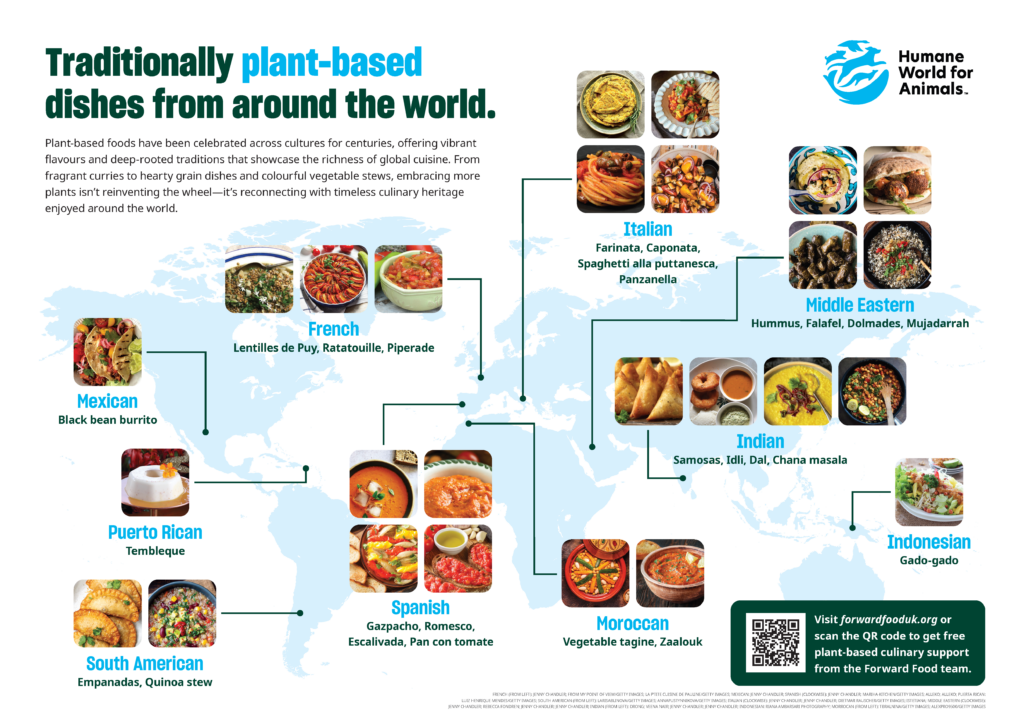
Plant‑based meals are among the most inclusive options on any menu, meeting a wide range of cultural, religious, ethical, and health‑related dietary needs without requiring separate or stigmatized alternatives.
Removing animal products from dishes eliminates five of the UK’s 14 major allergens (milk, eggs, fish, crustaceans, and molluscs) making meals suitable for more people by default.
From an operational perspective, inclusive plant‑based dishes simplify catering. Rather than maintaining multiple versions of the same meal to meet different dietary needs, a single well‑designed plant‑based option can serve many audiences at once – which reduces menu complexity, kitchen pressure, and the risk of error, while improving efficiency and consistency across services.
Kind to animals
Serving less meat, eggs, and dairy in large‑scale catering helps reduce demand for intensive farming systems, where the majority of farmed animals are raised in conditions that cause suffering and compromise welfare. By increasing plant‑based protein uptake, institutions can play a meaningful role in lowering the number of animals put in these inhumane situations.
This shift supports a more compassionate food system, helping to prevent animal suffering while contributing to a healthier, more humane world for people and animals alike.
